Asteroid V Meteoroid
What is the difference?
Asteroids:
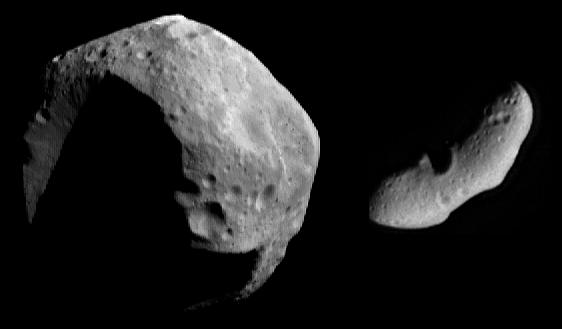
"Rocks" floating in space is the best description one can provide to define either of these objects. A layman's way of knowing which is which is based on the size of the rocks.
If the chunk of rock is significantly larger or in the range of 500-1000 kilometers in diameter it is given the tag of an Asteroid. We have one such belt of asteroids in our Solar system between Mars and Jupiter called as Asteroid Belt (No Joke!).
While these may seem extremely big boulders floating in space compared to the massive size of the planets, they seem quite small.
But these are not just rocks wandering in the dark space, these are composed of minerals and silicates and based on the amount of the chemicals present in them they are classified as C, S and M type of Asteroid.
According to the International Astronomical Union (IAU), Dust particles in the early Solar System collided, forming larger clumps, known as planetesimals. These could grow even further by attracting more dust with their gravitational field, if they became big enough it would become a planet if not then ladies and gentlemen here we present an asteroid!
Meteoroid:
Think of it as if the asteroid had shrunk to an even smaller size, it would become a meteoroid. Being smaller than an asteroid if it is 2 millimeters to 1 meter in size, it is a meteoroid. So in a way, these can be quoted as "space pebbles".
When these small rocks pass through our Earth's atmosphere (mesosphere) they are called meteors, and they burn bright to temperatures reaching 1800degrees(Celsius) and develop a burnt layer over them called the fusion crust. If the rock is small enough it will completely burn up in the atmosphere, leaving a sight to be cherished by people around the globe, as shooting stars. If one such space rock ever reaches the surface of our loved planet it is called a Meteorite. The -ite ending is often used in the names of rocks and minerals.
Sometimes, when a lot of meteors enter our atmosphere in a short period we get a cluster of shooting stars, such an event is called a meteor shower. For details on when you can catch your next meteor shower see the page of the American Meteor Society.
Where do they come from?
Remember the asteroid belt? Some of the meteors come from them but we also know about some that came from comets. Some meteoroids are fragments of planets or other celestial bodies that broke off when an asteroid smashed into them. You might have seen craters on the moon, something similar to that. Asteroids on impact push out a lot of debris in the form of meteoroids. which we happen to attract because of our close and strong gravitational effect on the Moon.
But do you know how important the Asteroid belt has been for us, Jupiter is our Guardian Angel, protecting our planet along with Mercury, Venus and Mars from repeated collisions, the Asteroid Belt keeps us safe from getting bombarded by those large asteroids.
Conclusion:
If the rock is big it is an Asteroid, if small Meteoroid, if it goes through our atmosphere Meteor, if it lands on our world Meteorite. Comets on the other hand just pass by and have a bright tail. If it were not for Jupiter we might have a different topology of our terrains.
If you enjoyed this blog share it with your friends and family and follow us for more!
Reading Material:
https://sites.wustl.edu/meteoritesite/
https://education.nationalgeographic.org/resource/meteoroid/



Literally very informative ✨
ReplyDeleteVery informative, keep posting
ReplyDelete